Over the summer, NYC-based educator Paola Garcia had the opportunity to join NYSG on two workshops: the Shipboard Science Immersion program on the Great Lakes and the MOLLUSCA Workshop in upstate New York.
— By Sumayyah Uddin, NYSG's Science Writer
Contact:
Nate Drag, New York Sea Grant Great Lakes Literacy Specialist, P: 716-270-2408, E: nwd4@cornell.edu
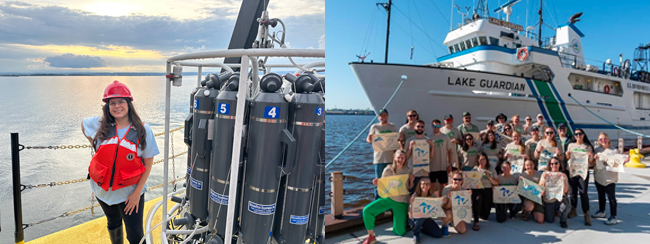
(L) Paola Garcia stands next to the rosette on the Lake Guardian with a view of Lake Superior behind her. Credit: Paola Garcia; (R) A group shot taken in front of the Lake Guardian on the final day of Shipboard Science Immersion. Credit: Image courtesy of Paola Garcia
New York, NY, September 17, 2026 - New York Sea Grant offers a variety of different programs for people who work, live, and recreate in and around coastal and marine habitats, including educators. NYC-based educator Paola Garcia is one such example. Over the last two years, her constant pursuit of becoming a better educator and community organizer has led her to participate in at least three Sea Grant-sponsored events: as a 2025 Jamaica Bay Community Flood Fellow, as a participant in NYSG’s collaborative MOLLUSCA Robot Workshop, and as an educator on board the U.S. EPA Research Vessel Lake Guardian with the 2026 Shipboard Science Immersion program.
“They're different vantage points into one of my favorite things, which is just water,” Garcia explained about the link between the different opportunities she’s applied for. “Water, whether it's drinking it, splashing in it, managing it, understanding it… love and water are the most potent things, right?”
It’s not an exaggeration to say that Garcia wears a lot of hats. She has taught sustainable systems at Parsons School of Design and Spanish at Harvard Business School; founded her own company, Born Carbon; and works as an Ambassador for the Billion Oyster Project. Self-described as a New Yorker, Argentinian, and environmental steward, she has been working in the resiliency space for around 15 years now. As a freelance educator, Garcia focuses on hands-on learning — understanding a topic by doing it.
“I'm big into experiential learning; that is my preferred way to learn,” she said. “I am also trying to create the same, or kind of remixes of these opportunities where I merge science with practical value to [my] community.”
All Aboard for Science Immersion
The annual Shipboard Science Immersion program (organized by the Great Lakes Center for Literacy, the Great Lakes Sea Grant Network, and the U.S. Environmental Protection Agency’s Great Lakes National Program Office) brings Great Lakes educators who work with grades 5-12 aboard the U.S. Environmental Protection Agency’s research vessel Lake Guardian for a weeklong hands-on workshop. From July 7 to 13, participants were given the chance to work directly with scientists and marine technicians for water and zooplankton sampling and analysis, learning concepts and practices they could bring back to their classrooms and communities. The program is hosted by the facilitator group on a different Great Lake each year; this year, Paola Garcia and other participants were on Lake Superior.
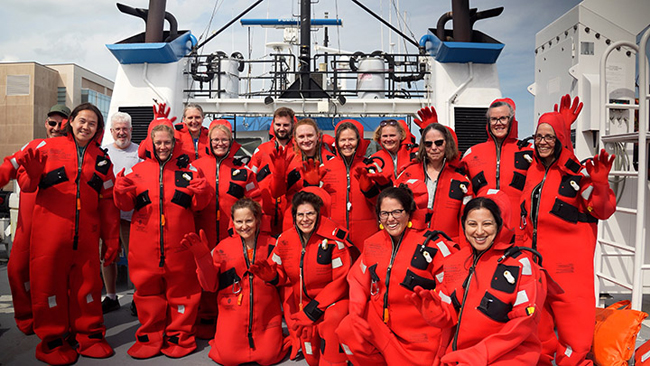
Great Lakes educators pose for a photo on board the Lake Guardian. Credit: C. Dettmann/Minnesota Sea Grant
Garcia describes the experience of being onboard the Lake Guardian as “life-changing,” saying that even if she does it again, the newness of the situation is a constant variable: “I feel like I have leveled up my science chops, you know? I have different terminology that I understand now, that I know how to pronounce, [and] that I know what it means.”
Garcia worked with a group under Dr. Elizabeth Austin-Minor, professor of chemistry at University of Minnesota Duluth, to study the photochemistry (or how chemicals react to sunlight) of Lake Superior waters. Part of this process involved using a variety of different tools to collect and analyze data.
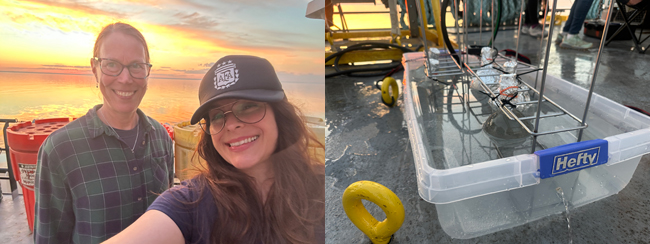
(L) Paola (right) poses for a picture with Dr. Elizabeth Austin-Minor; (R) One of the irradiation experiments set up on the deck of the Lake Guardian. Credit: Paola Garcia
“Basically, the rosette collects water samples,” Garcia said, “and then from there we look at a screen and it tells us chlorophyll levels, dissolved oxygen levels, temperature, and other indicators.”
Once the group located nutrient-rich water that they could test, Garcia explained some of the process: studying the light absorption and color footprint using a UV spectrometer, running water samples through both gravity and capsule filters, and doing an irradiation experiment with a radiometer by exposing water to sunlight on the deck. Each step was noted along the way, with the irradiation experiment taking place over 30 hours to see if anything “leached or grew” from the water.
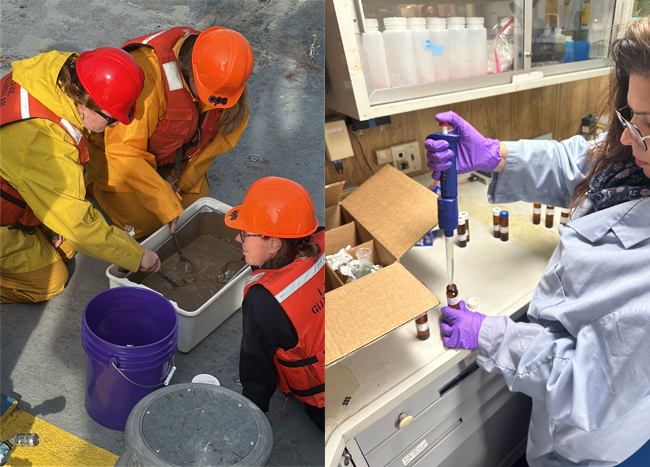
(L) Dr. Elizabeth Austin-Minor guides two Shipboard Science Immersion participants through an on-deck activity; (R) Paola puts water samples into bottles in the lab. Credit: Paola Garcia
“We had a lot of pride in the work, and we really tried to do our best. It was really cool to learn. I'm a pretty methodical person when I do stuff like that, so I liked that everyone around me was even more [methodical]. I was like, ‘Okay, I need to tighten it up,’” Garcia said with a laugh.
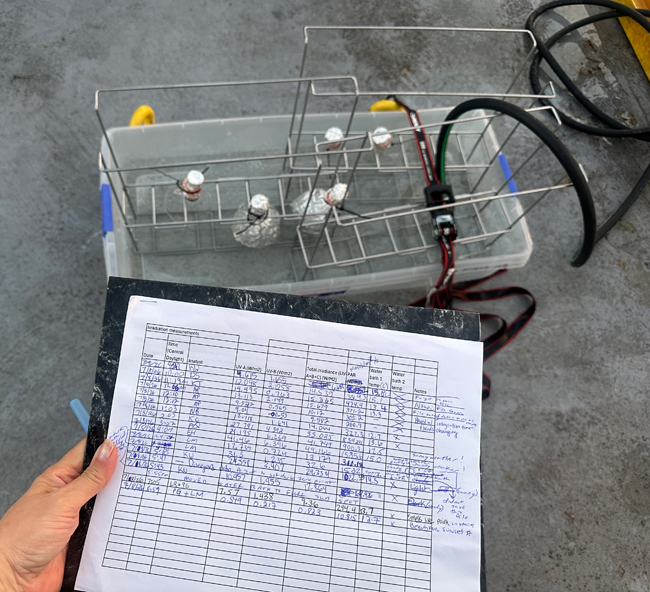
Some of the data Paola helped collect on the irradiation experiment. Credit: Paola Garcia
She also pointed out that the data her team collected and analyzed are connected to wider Great Lakes projects that the scientists would continue to work on.
Building a Creative Pedagogy
Shortly after the Shipboard Science Immersion, Garcia moved on to her next Sea Grant-sponsored opportunity: the MOLLUSCA Robot Workshops for New York State educators. A multi-year collaboration between a team from New York Sea Grant, Cornell University, Princeton University, and University of Michigan, the workshops introduced educators to a robotic design that collects microplastics from surface water. It had the ultimate goal of giving participants the tools and hands-on experience needed to introduce concepts into their classrooms.
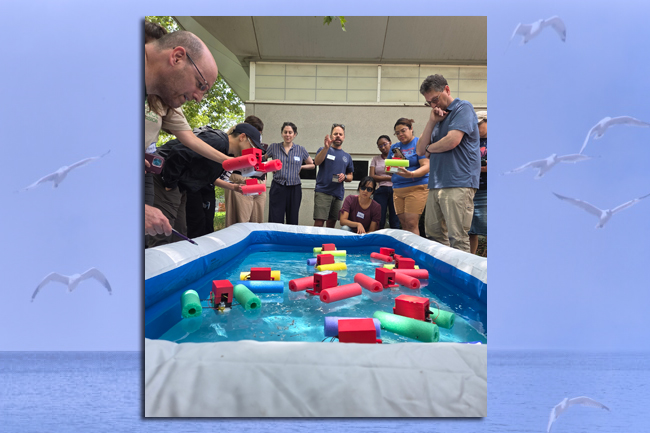
2026 MOLLUSCA Workshop participants test out their robots in the water. Credit: NYSG, Center for Great Lakes Literacy
Garcia participated in the inaugural workshop at the Cornell Biological Field Station in the summer of 2025. She returned to share her experience and advice with new teachers at this summer’s workshop at the Newtown Creek Wastewater Recovery Facility in Greenpoint, Brooklyn, on July 31, 2026.
“The Mollusca Robot workshops are a great opportunity to not only connect teachers and educators with robotics and microplastic pollution experts, but also to support their collaborative efforts to build educational resources for their students,” said Nate Drag (NYSG, Great Lakes Literacy Specialist); he runs the workshops and helps break down the project’s complex research so it is applicable to educators’ needs. “Paola has been involved in this project since the very start and continues to bring the classroom-scale robot directly to young people throughout NYC.”
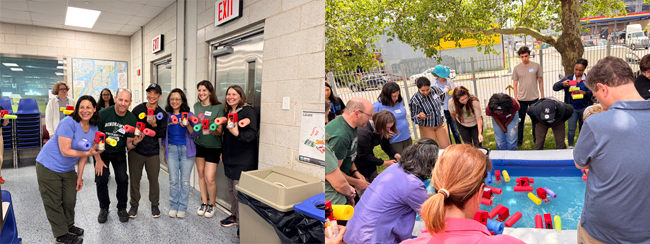
(L) 2026 MOLLUSCA Workshop participants pose with their robotic designs; (R) Participants test out their designs in the water. Credit: Sunghwan Jung
For Garcia, the MOLLUSCA Robot Workshop gave her a chance to continue to work toward her ultimate goal: building a creative pedagogy.
“I like things I can prove. I like logic. I want to weave some of my learning with MOLLUSCA, microplastics, and water health literacy to [work with educational] groups, because I think they also need to understand the science [behind what they work on],” she said. “MOLLUSCA is very appealing to me because it creates linkages between the scientists and educators who are the frontline disseminators of information for younger generations.”
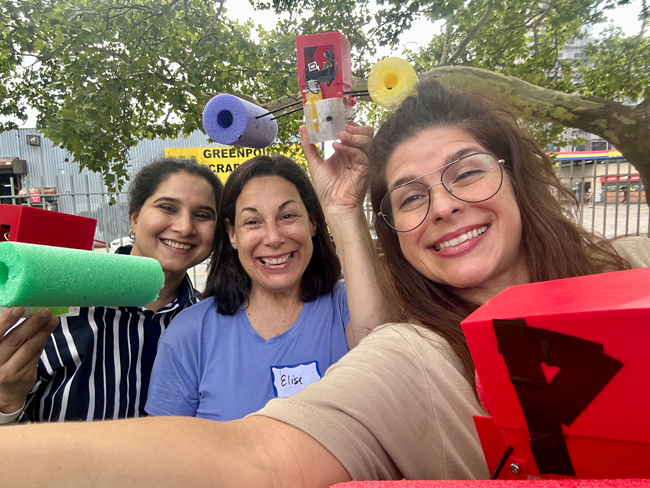
Paola (right) poses with 2026 MOLLUSCA Workshop participants and the robotic designs they created. Credit: Paola Garcia
What’s Next?
Post-workshops, Garcia continues to grow her company Born Carbon, curating creative STEM-focused curriculums and interdisciplinary programming. One such resource is the Green and Blue Career Guide she co-authored with the Waterfront Alliance, which has gone out to New York students this past year. She plans to continue pursuing a blend of unique experiences and certifications, from working with the National Wildlife Federation to secure climate change education legislation in NYS to growing the Stewardship Impact Collective she founded for The Climate Reality Project.
“I really want to nurture and build upon networks like Sea Grant and [workshops] like MOLLUSCA,” Garcia said. “There are talented people in the climate and resilience space, and I know they can add value to the work, reframe how I personally approach it, or teach me something I didn't consider before.”
More Info: New York Sea Grant
New York Sea Grant (NYSG) is a university-based, statewide Federal-State collaboration between the State University of New York (SUNY), Cornell University, and the National Oceanic and Atmospheric Administration (NOAA). It is one of 34 university-based programs that connects research, extension, and education with the needs of coastal communities, environments, and economies through NOAA.
Since 1971, NYSG has supported science-based solutions for a wide range of water-related challenges and opportunities across the state. Through NYSG’s efforts, university scientists and extension specialists help develop and transfer science and technical information to educational institutions, businesses, agencies, and industries; federal, state and local governments; the media; and the interested public. The program is administratively based at Stony Brook University (SBU) and Cornell's College of Agriculture and Life Sciences (CALS).
NYSG historically leverages on average a 5.5-fold return on each invested federal dollar, annually. The State benefits from this, as these resources are invested in Sea Grant staff and their work in communities right here in New York.
New York Sea Grant, one of the largest of the state Sea Grant programs, maintains Great Lakes offices at Cornell University, SUNY Buffalo, Rochester Institute of Technology, SUNY Oswego, the Wayne County Cooperative Extension office in Newark, and in Watertown. In the State's marine waters, NYSG has offices at Stony Brook University and with Cornell Cooperative Extension of Nassau County on Long Island, in Queens, at Brooklyn College, with Cornell Cooperative Extension in NYC, in Bronx, with Cornell Cooperative Extension of Ulster County in Kingston, and with Cornell Cooperative Extension of Westchester County in Elmsford.
Established in 1966, the National Oceanic and Atmospheric Administration (NOAA)’s National Sea Grant College Program promotes the informed stewardship of coastal resources in 34 joint federal/state university-based programs in every U.S. coastal state (marine and Great Lakes) and Puerto Rico. The Sea Grant model has also inspired similar projects in the Pacific region, Korea and Indonesia.
For updates on Sea Grant activities: www.nyseagrant.org, follow us on social media (Facebook, Twitter/X, Instagram, Bluesky, LinkedIn, and YouTube). NYSG offers a free e-list sign up via www.nyseagrant.org/nycoastlines for its flagship publication, NY Coastlines/Currents, which it publishes quarterly.